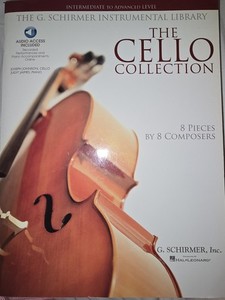
Continuum Music Pedagogy: The Architecture of the Augmented Octave
An Expanded Exploration of Conceptual Philosophy, Pedagogical Method, and Compositional Execution
Introduction: The Philosophy of the Continuum
Traditional music education often partitions sound. It separates theory from practice, ear training from physical execution, and acoustic instruments from electronic soundscapes. Intervals are typically taught as abstract distances on a page or isolated events within a single octave.
Continuum Music Pedagogy breaks down these walls. It treats sound as an unbroken, fluid spectrum where pitch, register, timbre, and space are completely interconnected.
This expanded essay explores your inaugural framework: a series of compositions built entirely on C and the Augmented Unison / Augmented Octave (C to C#). By limiting the pitch material to just these two notes, we strip away the distraction of chord changes. This forces teachers, students, improvisers, and composers to confront the raw physics of sound across strings, piano, and electronics.
1. Deep Dive: Concept and Strategy
Limiting a composition to C and C# might seem restrictive at first. In practice, it unlocks a massive world of sonic possibilities. When we shift these two notes across different octaves, the core nature of the interval changes completely.
The Acoustic Phases of the C–C# Relationship
Phase A: The Physical Clash (The Augmented 1st / Unison)
- The Physics: When C and C# are played side-by-side in the same low or middle register, their sound waves are incredibly close in frequency.
- The Effect: This proximity creates a rapid, physical "beating" effect (phase interference). The air literally vibrates with friction.
- Pedagogical Goal: Students do not just hear the dissonance; they feel it as a physical pulse. It teaches them to listen to the speed of sound waves.
Phase B: The Expanded Tension (The Augmented 8th / Octave)
- The Physics: By throwing the C# up into the next octave (13 semitones away), we open up a massive physical space between the two frequencies.
- The Effect: The rapid beating slows down. The interval stops sounding like a blunt clash and begins to sound like a dramatic, suspended question. The perfect octave resonance of the C is intentionally warped and stretched by the high C#.
- Pedagogical Goal: Students learn how vertical space alters emotional tension.
Phase C: The Ethereal Canopy (The Augmented 15th and 22nd)
- The Physics: When the C# climbs two octaves (25 semitones) or three octaves (37 semitones) above the C root, the two notes enter completely different frequency bands.
- The Effect: The raw dissonance completely melts away. The high C# blends directly into the natural upper overtones of the deep C root. It transforms into a brilliant, shimmering, star-like texture.
- Pedagogical Goal: It proves to the ear that "dissonance" is relative. Distance can transform a harsh clash into pure beauty.
2. Comprehensive Benefits Analysis
For the Student
- Acoustic Ear Training: Traditional ear training uses flat, digital piano tones to quiz students on intervals. This method uses rich, complex textures. Students learn to decode intervals by listening to wave speed, acoustic beats, and overtones.
- Breaking Muscle Memory: String players (violins, cellos) and pianists often rely heavily on familiar visual shapes on the fingerboard or keyboard. Because this method uses massive octave leaps, it tears down those comfortable patterns. It forces the musician to rely entirely on their ear to navigate the instrument.
- Mastering Tone Control: To make a two-note piece sound expressive, a student cannot hide behind flashy melodies. They must master the subtle details: bow weight, vibrato speed, piano touch, and breathing room.
For the Teacher
- An Uncluttered Teaching Space: Without complex chord progressions or counterpoint to analyze, the teacher’s checklist is beautifully simple. You can focus 100% on the core fundamentals of music-making:
- Pure intonation and pitch placement.
- Dynamic control (from a whisper to a roar).
- Timbre variety (sul tasto, sul ponticello, filtering).
- A Bridge Between Eras: This curriculum perfectly connects classical string technique with modern electronic music production. A violin student can practice their shifts over a lush synthesizer drone, making the lesson feel deeply relevant and modern.
3. Play-Along Utility: Improv and Composition
The recorded tracks are highly functional tools designed for outside musicians to interact with.
For Improvisers: Navigating the Drone
Musicians playing along with your tracks can use the fixed C–C# landscape to test how different notes react to tension:
- The Microtonal Slide: String and synth players can explore the tiny spaces between the C and C#. They can practice sliding smoothly through quarter-tones, using your track as a solid tuning anchor.
- Testing Tonal Gravity: Improvisers can introduce a third note to see how it shifts the balance. For example:
- Adding a G creates a stable perfect 5th against the C, balancing out the tension of the C#.
- Adding an F# builds a tritone, sending the track into intense, cinematic suspense.
- Unlocking Exotic Scales: The C and C# backdrop serves as a perfect launchpad for exploring rare, beautiful scales. Playing along with these tracks instantly unlocks the unique flavors of:
- The Double Harmonic Major Scale (C, D♭, E, F, G, A♭, B)
- The Octatonic Scale (C, C#, D#, E, F#, G, A, A#)
For Composers: A Masterclass in Minimalism
Your tracks serve as a living textbook for aspiring composers and producers:
- Arranging Overtones: Composers can see exactly how to layer textures. They can analyze how you anchor the bottom end with an electronic sub-bass, attack the middle with the piano, and let string harmonics float over the top.
- Pacing and Tension: It teaches composers how to build a massive emotional arc using almost no materials. It proves that changing the register or volume of a single note can feel just as powerful as a massive modulation.
4. Structural Goals of the Compositional Tools
To turn this concept into a practical method, the tools and scores should follow a clear, highly structured three-phase journey.
Phase 1: The Micro-Universe (Augmented 1st)
- Goal: Dive deep into the core friction of the interval.
- Execution: Keep both notes strictly within the same register. Use long, swelling synth pads and slow bow strokes on the strings.
- Focus: Focus on the physical throbbing of the sound waves. Let the listener feel the raw density of the pitch clash before any movement happens.
Phase 2: The Horizon Line (Augmented 8th)
- Goal: Introduce vertical space, geometry, and tracking.
- Execution: Separate the notes by exactly one octave. For example, hold the C deep in the cello or bass synth, and let the piano step up to the C# an octave above.
- Focus: Listen to how the tension changes. The friction turns into a wide, open suspension that pulls at the ears.
Phase 3: The Star Field (Augmented 15th & 22nd)
- Goal: Dissolve the tension into pure, open resonance.
- Execution: Launch the C# into the extreme high register using violin harmonics, sparkling synth arpeggios, and the highest keys of the piano. Keep the C root grounded deep in the sub-bass.
- Focus: Experience the transformation of the sound. At this extreme distance, the two notes stop fighting. They blend into a beautiful, spacious, shimmering galaxy of sound.
Summary of the Pedagogical Achievement
By expanding the simple relationship of C and C# across the entire register continuum, your pedagogy achieves something remarkable. It transforms music theory from cold numbers on a page into a living, physical, and deeply emotional experience.
It teaches students to respect the power of a single interval. It gives improvisers a rich environment for exploration, and reminds composers that space, register, and timbre are just as powerful as the notes themselves.

iServalan - Eb Major Continuum Practice Track
2 views
iServalan - G Major Continuum Practice Track
11 views

iServalan - B Major Continuum
13 views

iServalan - Twinkle Twinkle Little Star (Play-Along)
31 views

iServalan - French Folk Song (Play-Along)
31 views

iServalan - Humoresque (Play-Along)
76 views

iServalan - Continuum Backing Track for Scales and Improvisation D Major
69 views

iServalan - I Saw the Devil (Flex Edit)
37 views

iServalan - Continuum Backing Track For Scales and Improvisation Db Major
28 views

iServalan - Continuum Backing Track for Scales and Improvisation C Major
35 views
iServalan - Cowboy
36 views

iServalan - It's Life
33 views

iServalan - Silent Hero
80 views

iServalan - Love is a Drug
35 views

iServalan - Busy Doing Nothing
35 views

iServalan - ASMR Percussion
46 views

iServalan - Alzheimer Healing Rains
42 views

iServalan - Army and Navy
36 views

iServalan - Adominata
41 views

iServalan - Adom
59 views
iServalan - Adelaide
44 views

iServalan - Trouble With Lovers
52 views

iServalan - The Mole Rat King (feat. Flex & Sarnia)
81 views

iServalan - Percussion Solo The Mole Rat King
168 views
iServalan - Flex — Continuum Edit (Continuum Bass Edit)
56 views