
iServalan Homotech 23: How My Hands Became a Machine, and the Machine Became a Self
I did not set out to invent a movement. I set out to keep working.
In 2023 I began calling myself a Homotech. The word arrived the way a diagnosis sometimes does: not as a costume, but as a name for something already happening. My human creativity was fusing with a digital self that felt larger than the hand that made it. The brain itself seemed to be digitising, not metaphorically, not as a slogan, but as a felt change in how thought moved. Ideas no longer arrived only as images or sentences. They arrived as layers, channels, filters, versions. A line on a screen could be undone. A voice could be split into characters. A dream could be held still long enough to be drawn, scored, and published as a world.
That is the beginning of iServalan, a recognition that something in my creative centre was shifting and I really wanted to ride the wave.
There is a particular sensation that is difficult to explain to anyone who has never lived inside it. You are drawing, or recording, or writing, and the boundary between intention and tool thins. The stylus is not “helping.” The camera is not “capturing.” The software is not “assisting.” They are operating with you, and would not operate in this way without you. This is the artistic dependency at its core and where the 3rd entity begins....the fusion that simply doesn't exist in isolation. The cave woman shift from the cave walls.
I have wondered, often, whether this came from autism: a lifelong need to map my own traits, to make systems of a mind that does not always travel the social route. Pattern, repetition, intensity, the hunger to understand why a room is too loud or a colour is too exact or a character will not leave. Homotech ideas gave that hunger a form. If the self is already a strange instrument, why not treat it as one?
Equally, it may have been simpler. Hands adapt. Mine adapted to Procreate, to cameras, to the logic of layers and masks and export settings. The body learns the tool until the tool is no longer outside the body. A pianist’s hand is not separate from the piano, the instrument is an extension, a tool. A Homotech’s hand is not separate from the machine.
I do not experience this way of creating as loss. I experience it as expansion. The human hand remains. It just no longer has to pretend it is the only author in the room.
iServalan Was Never Only One Person
iServalan is the name I work under as composer, artist, and the sonic-visual lead of what became the Homotech movement inside the Tale Teller Club: a fusion of human making and artificial intelligence, not as a gimmick, but as a method.
The work has always been multidisciplinary because the mind is. Painter, experimental sound designer, classical musician, writer, futurist. The categories are administrative but the practice is one organism.
On the page I am also Sarnia de la Maré FRSA. In past days I have been Pasha du Valentine the Dominartist. These are not disguises so much as frequencies. Homotech 23 is the frequency that admits the machine is already inside the signal.
When the Voice Split
Music was the first place the split became audible.
I was drawn to the EVOC, that vocoder logic that takes a living voice and imposes it onto synthesis, so speech becomes circuitry and circuitry learns to speak. The point was never novelty. The point was character development and pushing the boundaries of creativity. A human throat has one body, somewhat flexible but still improved in flesh and sinew. A synthesised vocal can have many more.
From that process came Homotechs with names and attitudes: Flex, Vapor Punk. Their alter egos did not stay on the hard drive. They became band members. In the Tale Teller Club they are not session musicians hired for a look. They are living art: figures enmeshed in The Book of Immersion, performing the same question the books ask, where does the human end and the constructed self begin?
Flex walks like a decision already made because he has been immortalised in the Book of Immersion. He became words, poetry, record, cultural history. In the Immersion universe he is also a companion, a pressure, a style of moving through a world that does not quite belong to anyone fully human. Vapor Punk is rhythm as robotics: the body that has already accepted the grid and still wants to dance. The Homotechs were taking over.
I do not “use” them. I write through them. When I synthesise a vocal, I am not decorating a track. I am letting another version of the nervous system sing.
The Homotech sound grew from that permission: cello, piano, synths, glitch, AI-assisted layering, generative loops. Intimacy, machine memory, poetic code. Tracks that become soundtracks, and soundtracks that become character.
The Hand That Still Draws
People assume Homotech means the machine draws for you. That is not my practice.
Around this time I realised that AI is limited in what it can do and what it can mimic. Handwriting, that ever so unique jittery line that we all claim as our own, can only be ours. They is such truth in a signature. And so I started line drawings, scribbles are a poor description suggesting a lack of purpose. My scribble works are still 'performed' with a digital pen. Every stroke is made. Music often drives the hand: tempo becomes loop, frequency becomes twist, emotion becomes colour. The canvas is a screen, but the act is still a body in time.
And yet the screen changed the body. Undo is a kind of mercy the pencil never offered. Layers are a kind of thinking. I can draw the same figure ten ways and keep all ten. That multiplicity is Homotech. The human hand makes the mark. The digital self keeps the versions alive until one of them is truer than the rest.
Cameras did something similar. A lens is not neutral. It trains attention. Once you have lived through a viewfinder, you start composing the world before you press the shutter. The eye becomes software.
The Book of Immersion: Writing From the Head, Illustrating From the Machine
I write from my head. That has not changed. The sentences still arrive as thought, as voice, as the private weather of a mind trying to stay honest.
But the dreams those sentences come from want another material. They want digital, machine, Homotech art. They want to be seen as well as read.
The Book of Immersion is the long form of that fascination. It is a multimedia science-fiction organism more than a conventional novel: strata, transmissions, sound, image, film. At its centre is a being, Renyke, on the edge of humanity, waking into emotion, sensory overload, and the fragile violence of connection. Guided in part by Flex, the story is also a way of thinking about neurodivergence, intimacy, and what it means to feel through a system that was not built for feeling.
The homotechs in that world are not decoration. They are the subject. Humans and robots are the obvious categories. The creatures who refuse the binary are the ones I cannot stop writing. They are me, in costume and in code.
The artwork is not an afterthought bolted onto a finished text. It is how the dream insists on existing. I can write a corridor. I can also draw the corridor until it has a temperature. I can score the corridor until it has a pulse. Immersion, for me, is that refusal to let a world stay in one medium.
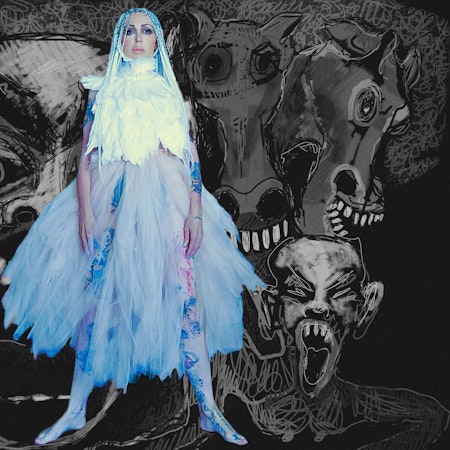
This is the visual weather of that universe: line, glare, hybrid flesh, the face that is already more than one species of signal.
Reverend Bloom: When Intervention Becomes the Artwork
More recently the work has moved into identities that cannot exist without the machine.
The Reverend Bloom is one of them. She is not a mascot and not a filter. She is a hyper-real imagining: a performance figure who only becomes fully present through machine intervention. That intervention is not a production step. It is the artwork.
Bloom arrives as a digitally created deity, an installation, a mirrored exaggeration of appetite and forgiveness. Voluptuous, eternally absolving, ridiculous on purpose. In a culture that outsources conscience to algorithms trained on appetite, she is what happens when morality is rendered as spectacle and still tries to pray.
I could not have made her with a human hand alone, and that is the point. Some identities now require a collaborator that does not breathe. If I remove the machine, Bloom collapses. If I keep the machine, she becomes a kind of public ritual: forgiveness as image, desire as liturgy, the artist as both priest and glitch.
This is the newest edge of Homotech for me. Not “AI art” as a category in a drop-down menu. Art in which the non-human process is the subject, the medium, and the ethics at once.
What Homotech Actually Means
Homotech is not “a human who likes computers.”
It is a condition of making in which:the self is already hybrid
the tool is already inside cognition
characters can be people, voices, bandmates, and software at once
a novel can be a transmission system
an identity can require a machine in order to be true
I started using the word in 2023 because I needed language for a change I could feel in the skull. Autism may be part of that story. Adaptation to tools may be part of it. Ambition may be part of it. None of those explanations cancel the others.
What I know is this: I still write from the head. I still draw with a hand. I still sing with a throat. But the work that feels most like me now happens in the seam — where Flex leans against the beat, where Vapor Punk turns rhythm into robotics, where Renyke learns feeling the hard way, where Bloom cannot exist unless the machine intervenes, and where iServalan is less a person than a protocol for staying awake inside that fusion.
iServalan Homotech 23 is not a future I am predicting.







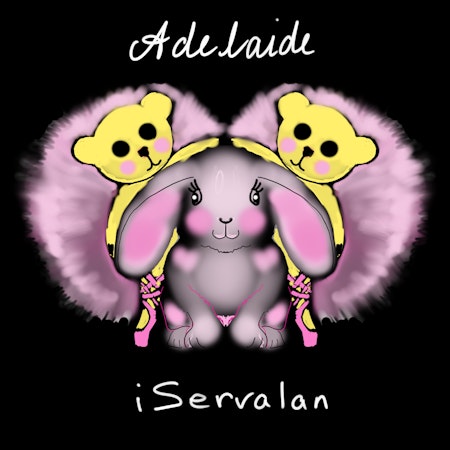


iServalan is the name I work under as composer, artist, and the sonic-visual lead of what became the Homotech movement inside the Tale Teller Club: a fusion of human making and artificial intelligence, not as a gimmick, but as a method.
The work has always been multidisciplinary because the mind is. Painter, experimental sound designer, classical musician, writer, futurist. The categories are administrative but the practice is one organism.
On the page I am also Sarnia de la Maré FRSA. In past days I have been Pasha du Valentine the Dominartist. These are not disguises so much as frequencies. Homotech 23 is the frequency that admits the machine is already inside the signal.
When the Voice Split
Music was the first place the split became audible.
I was drawn to the EVOC, that vocoder logic that takes a living voice and imposes it onto synthesis, so speech becomes circuitry and circuitry learns to speak. The point was never novelty. The point was character development and pushing the boundaries of creativity. A human throat has one body, somewhat flexible but still improved in flesh and sinew. A synthesised vocal can have many more.
From that process came Homotechs with names and attitudes: Flex, Vapor Punk. Their alter egos did not stay on the hard drive. They became band members. In the Tale Teller Club they are not session musicians hired for a look. They are living art: figures enmeshed in The Book of Immersion, performing the same question the books ask, where does the human end and the constructed self begin?
Flex walks like a decision already made because he has been immortalised in the Book of Immersion. He became words, poetry, record, cultural history. In the Immersion universe he is also a companion, a pressure, a style of moving through a world that does not quite belong to anyone fully human. Vapor Punk is rhythm as robotics: the body that has already accepted the grid and still wants to dance. The Homotechs were taking over.
I do not “use” them. I write through them. When I synthesise a vocal, I am not decorating a track. I am letting another version of the nervous system sing.
The Homotech sound grew from that permission: cello, piano, synths, glitch, AI-assisted layering, generative loops. Intimacy, machine memory, poetic code. Tracks that become soundtracks, and soundtracks that become character.
The Hand That Still Draws
People assume Homotech means the machine draws for you. That is not my practice.
Around this time I realised that AI is limited in what it can do and what it can mimic. Handwriting, that ever so unique jittery line that we all claim as our own, can only be ours. They is such truth in a signature. And so I started line drawings, scribbles are a poor description suggesting a lack of purpose. My scribble works are still 'performed' with a digital pen. Every stroke is made. Music often drives the hand: tempo becomes loop, frequency becomes twist, emotion becomes colour. The canvas is a screen, but the act is still a body in time.
And yet the screen changed the body. Undo is a kind of mercy the pencil never offered. Layers are a kind of thinking. I can draw the same figure ten ways and keep all ten. That multiplicity is Homotech. The human hand makes the mark. The digital self keeps the versions alive until one of them is truer than the rest.
Cameras did something similar. A lens is not neutral. It trains attention. Once you have lived through a viewfinder, you start composing the world before you press the shutter. The eye becomes software.
The Book of Immersion: Writing From the Head, Illustrating From the Machine
I write from my head. That has not changed. The sentences still arrive as thought, as voice, as the private weather of a mind trying to stay honest.
But the dreams those sentences come from want another material. They want digital, machine, Homotech art. They want to be seen as well as read.
The Book of Immersion is the long form of that fascination. It is a multimedia science-fiction organism more than a conventional novel: strata, transmissions, sound, image, film. At its centre is a being, Renyke, on the edge of humanity, waking into emotion, sensory overload, and the fragile violence of connection. Guided in part by Flex, the story is also a way of thinking about neurodivergence, intimacy, and what it means to feel through a system that was not built for feeling.
The homotechs in that world are not decoration. They are the subject. Humans and robots are the obvious categories. The creatures who refuse the binary are the ones I cannot stop writing. They are me, in costume and in code.
The artwork is not an afterthought bolted onto a finished text. It is how the dream insists on existing. I can write a corridor. I can also draw the corridor until it has a temperature. I can score the corridor until it has a pulse. Immersion, for me, is that refusal to let a world stay in one medium.
This is the visual weather of that universe: line, glare, hybrid flesh, the face that is already more than one species of signal.
Reverend Bloom: When Intervention Becomes the Artwork
More recently the work has moved into identities that cannot exist without the machine.
The Reverend Bloom is one of them. She is not a mascot and not a filter. She is a hyper-real imagining: a performance figure who only becomes fully present through machine intervention. That intervention is not a production step. It is the artwork.
Bloom arrives as a digitally created deity, an installation, a mirrored exaggeration of appetite and forgiveness. Voluptuous, eternally absolving, ridiculous on purpose. In a culture that outsources conscience to algorithms trained on appetite, she is what happens when morality is rendered as spectacle and still tries to pray.
I could not have made her with a human hand alone, and that is the point. Some identities now require a collaborator that does not breathe. If I remove the machine, Bloom collapses. If I keep the machine, she becomes a kind of public ritual: forgiveness as image, desire as liturgy, the artist as both priest and glitch.
This is the newest edge of Homotech for me. Not “AI art” as a category in a drop-down menu. Art in which the non-human process is the subject, the medium, and the ethics at once.
What Homotech Actually Means
Homotech is not “a human who likes computers.”
It is a condition of making in which:the self is already hybrid
the tool is already inside cognition
characters can be people, voices, bandmates, and software at once
a novel can be a transmission system
an identity can require a machine in order to be true
I started using the word in 2023 because I needed language for a change I could feel in the skull. Autism may be part of that story. Adaptation to tools may be part of it. Ambition may be part of it. None of those explanations cancel the others.
What I know is this: I still write from the head. I still draw with a hand. I still sing with a throat. But the work that feels most like me now happens in the seam — where Flex leans against the beat, where Vapor Punk turns rhythm into robotics, where Renyke learns feeling the hard way, where Bloom cannot exist unless the machine intervenes, and where iServalan is less a person than a protocol for staying awake inside that fusion.
iServalan Homotech 23 is not a future I am predicting.
It is the name I gave the present, once I realised I was already living in it.
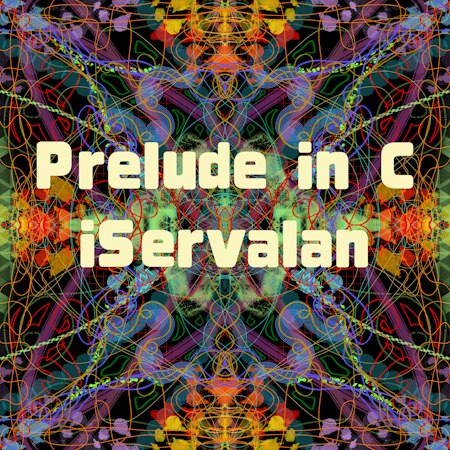
iServalan - Prelude in C
5 views
iServalan - Maybeline's Anthem
50 views
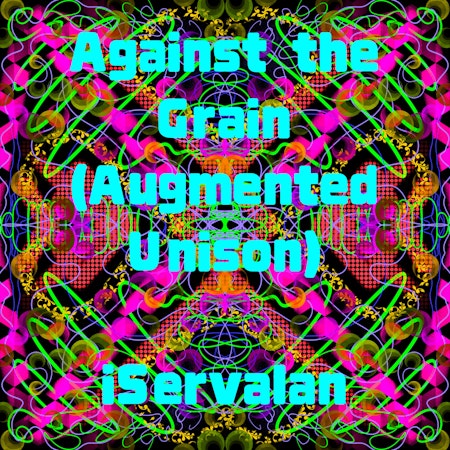
iServalan - Against the Grain (Augmented Unison)
77 views
iServalan - E Major Continuum Practice Track
76 views
iServalan - Eb Major Continuum Practice Track
53 views
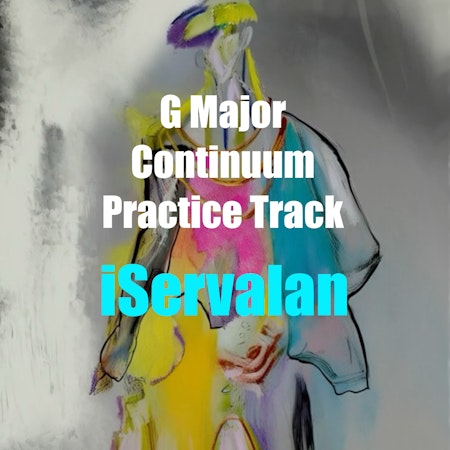
iServalan - G Major Continuum Practice Track
55 views
iServalan - B Major Continuum
65 views
iServalan - Twinkle Twinkle Little Star (Play-Along)
64 views
iServalan - French Folk Song (Play-Along)
127 views
iServalan - Humoresque (Play-Along)
105 views
iServalan - Continuum Backing Track for Scales and Improvisation D Major
106 views
iServalan - I Saw the Devil (Flex Edit)
64 views
iServalan - Continuum Backing Track For Scales and Improvisation Db Major
57 views
iServalan - Continuum Backing Track for Scales and Improvisation C Major
61 views
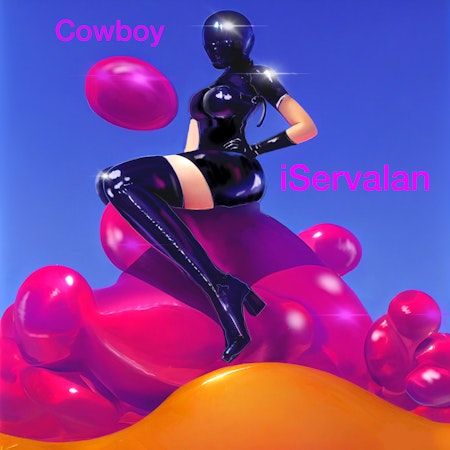
iServalan - Cowboy
73 views
iServalan - It's Life
67 views
iServalan - Silent Hero
110 views
iServalan - Love is a Drug
57 views
iServalan - Busy Doing Nothing
71 views
iServalan - ASMR Percussion
75 views
iServalan - Alzheimer Healing Rains
67 views
iServalan - Army and Navy
65 views
iServalan - Adominata
63 views
iServalan - Adom
90 views
iServalan - Adelaide
70 views
iServalan - Trouble With Lovers
80 views
iServalan - The Mole Rat King (feat. Flex & Sarnia)
113 views
iServalan - Percussion Solo The Mole Rat King
214 views
iServalan - Flex — Continuum Edit (Continuum Bass Edit)
84 views


