Music School

Focusing on Scales and Chords for Piano and Strings
Wednesday, August 12, 2026
The Continuum Approach for Children: Inclusion, Early Agency, and Complementary Pathways.
The Continuum Approach for Children: Inclusion, Early Agency, and Complementary Pathways
The Continuum Approach understands musical learning in childhood not as a sequence of graded achievements but as an open field of sound that a child may enter, explore, and return to according to their own nervous system, curiosity, and capacity. It is designed from the outset for the widest possible range of abilities and needs, including children with special educational needs, sensory processing differences, neurodivergence, physical or communication variations, and those whose learning simply does not fit linear or performance-driven models. The same material—an open string, a sustained drone, a simple gestural score, a shared pulse—can hold equal musical truth for a child encountering sound for the first time and for one already fluent in another tradition. Progress is measured by clarity of engagement, comfort, and the growth of agency rather than by speed or comparison.
At the heart of this inclusivity is emotional safety. Continuum begins by establishing conditions in which pressure is replaced by permission. Children are not required to prove readiness, produce correct notes on demand, or move at a uniform pace. Instead they are invited into listening, into the physical relationship with the instrument or with their own body as a sound-maker, and into the freedom to respond in ways that feel coherent to them. For many children with special educational needs this removal of external evaluative demand is transformative. Sensory overload is reduced; executive load is lightened; the threat of failure is diminished. The nervous system is freer to organise itself around resonance rather than around compliance. Visual scores, line drawings, and image-based invitations further support learners for whom traditional notation feels dense or overwhelming, while still remaining available to those who thrive with conventional symbols.
Where many methods postpone composition, improvisation, and deep ear work until technical foundations are judged secure, Continuum places these capacities at the beginning. Composition is treated as an early and natural behaviour: the child decides, chooses, shapes, and responds. Ear skills develop through sustained attention to the instrument’s own harmonics, to drones, to the felt difference between beating and settled resonance, and to the simple act of matching sound with sound. Physical embodiment is equally primary. The child learns the instrument through the body—through the weight of the bow, the contact of fingers, the breath that supports tone, and the larger movements that organise the whole self in relation to the instrument. Concepts such as the orbit—circular, continuous pathways of movement around or with the instrument—help children inhabit space, find balance, and experience sound as something that travels and returns. Dance, free movement, and body percussion are not later enrichments but foundational languages. They train pulse, phrasing, dynamic contrast, and ensemble awareness through the whole body before those same qualities are asked of the hands alone. In this way the child builds a rich internal map of musical experience that later technical work can inhabit rather than invent from scratch.
This early emphasis does not isolate Continuum from other approaches. On the contrary, the Framework is explicitly designed to complement existing methods and to function equally well as a primary developmental pathway. Its growing library of tools—drones, single-note explorations, visual and gestural scores, movement patterns, body percussion sequences, and relational tuning practices—can be introduced alongside Suzuki repertoire, Kodály solfège, Orff processes, traditional technical studies, or any other structured curriculum. Because Continuum privileges listening, resonance, and agency over rigid sequence, these tools integrate without conflict. A child working through graded exam pieces can still spend time with open-string resonance or simple compositional decisions; a child following a method that delays improvisation can be given safe, low-stakes opportunities to shape sound from the first lessons. The tools remain essential to the Continuum process yet remain portable: they support, deepen, and humanise whatever parallel pathway a child is travelling.
For teachers this dual capacity is practical. Continuum can serve as the main channel for young learners whose needs or temperaments are poorly served by hierarchical models, providing a coherent, pressure-free architecture in which technique, creativity, and embodiment grow together. At the same time it offers a set of adaptable resources that any teacher can draw upon to increase safety, sensory accessibility, and creative agency within an existing method. The same principle that serves a neurotypical child—small steps, listening first, permission to return—serves the child with sensory sensitivities, attention differences, or physical variations with particular clarity. The approach does not require the child to adapt to a fixed sequence; the sequence adapts to the child.
In practice the Continuum classroom or studio becomes a place of multiple simultaneous pathways. One child may be exploring a single pitch through movement and voice; another may be combining body percussion with a simple composed gesture; a third may be matching an open string to a drone while a peer experiments with visual line scores. All are engaged in authentic musical behaviour. All are building the neural and emotional foundations that support later refinement. The teacher’s role is less that of sequential instructor than of careful companion: noticing when safety is present, when curiosity leads, and when a small adjustment of material or pacing allows deeper contact.
The result is a form of musical education that does not postpone the most human aspects of music-making until after the “basics” are mastered. Composition, listening, embodiment, movement, and creative decision-making are the basics. Technique grows inside them rather than preceding them. For children of every ability this ordering restores dignity and possibility. It allows those who might otherwise be excluded by rigid expectations to remain inside the field of sound, and it gives every child—regardless of label or starting point—an early experience of musical agency that can accompany them across a lifetime. Continuum does not replace other methods; it enlarges the ground on which they can stand, ensuring that the first experiences of music are characterised by resonance, safety, and the quiet freedom to belong.
From the Book, The Continuum Approach to Music: Foundations: A Pedagogical Framework for Musical Learning









Sunday, August 9, 2026
The ‘Add One Note’ Method The De la Maré Music Continuum | Adaptive, Pressure-Free Music Learning Framework
The ‘Add One Note’ Method in Continuum Music Pedagogy™
Continuum Music Pedagogy understands musical learning as a living relationship with sound rather than a ladder of discrete achievements. Progress arises through sustained engagement, emotional safety, agency, and the capacity to enter and re-enter material at varying depths. Within this framework the ‘add one note’ method of practice stands as a central practical expression of the Continuum philosophy: differences and steps remain small, yet the cumulative results become extreme. By beginning with a single note and gradually introducing others while exploring the full range of expressive possibility, the musician develops technical fluency, expressive range, and musical intuition with remarkable speed and depth.
The method begins with a piece, an exercise, or a scale reduced to its most elemental unit—one note. That single sound is not treated as a preliminary formality but as a complete field of exploration. The player varies it systematically and imaginatively: different articulations (legato, staccato, accents of varying weight, tenuto, and the many nuanced attacks available on any instrument), dynamic extremes from the softest whisper to forceful projection, emotional colours (lullaby, march, aggressive, tender, questioning), bow directions or equivalent physical gestures (up-bow versus down-bow, long versus short strokes, starting hard and ending soft, or the reverse), and shifts in tone colour, vibrato presence or absence, and spatial or temporal placement. Each variation is given time and attention so that the body, the ear, and the imagination register the precise physical and sonic differences. Because only one note is under consideration, cognitive load remains low and awareness remains high. The musician discovers that a single pitch already contains a vast repertoire of expression.
Once a secure and flexible relationship with the first note has been established, a second note is added. In free exercises such as scales the process continues in the same exploratory spirit: the new interval or step is itself subjected to the full range of articulations, dynamics, emotional characters, and physical approaches, and the combination of the two notes is then varied as a unit. The musician listens for the relationship between the tones—how one prepares or releases into the other, how resonance or beating emerges, how different bow or finger choices alter the connection. For repertoire that carries written markings the process respects those indications first, then opens controlled space for experiment where the score permits or where deeper understanding of the marked intention is sought. In both cases the addition remains minimal: only one new note at a time. Each increment is fully inhabited before the next is introduced.
The power of the method lies in the rapid amplification that follows from these small increments. Because every new note arrives already embedded in a rich matrix of previously explored possibilities, technical control and expressive freedom transfer almost immediately. Coordination improves, intonation stabilises through heightened listening, and the capacity to shape phrase and character expands without the usual plateaus that accompany large, undifferentiated practice blocks. What begins as patient attention to a single sound quickly yields fluent passages, secure scales spanning multiple octaves, and interpretive insight into entire pieces. The growth feels organic rather than forced; skills compound because each step rests on a thoroughly prepared foundation rather than on superficial repetition.
This process embodies the Continuum conviction that musical development is non-linear and field-like. An open string or a sustained tone can hold as much musical truth for an experienced player as for a beginner; the difference lies in the depth of relationship rather than in hierarchical ranking. By insisting on small, fully realised differences, the method cultivates agency: the musician learns to choose, to listen, and to refine rather than merely to execute. Resonance takes precedence over mere correctness; safety and curiosity replace urgency and comparison. The same material can therefore serve radically different levels of experience, and progress is measured by clarity, comfort, and sustained engagement rather than by speed of advancement through a syllabus.
In practice the ‘add one note’ approach proves especially effective for building confidence in neurodiverse learners, returning adults, and young students alike, because it keeps the focus intimate and the demands manageable while still producing ambitious musical outcomes. It works equally well for bowed strings, keyboard, wind, voice, or any other instrument, adapting the vocabulary of variation to the physical realities of each. Over time the habit of microscopic, multi-dimensional exploration becomes second nature, so that even complex repertoire is approached with the same quiet thoroughness that once transformed a single note.
The Continuum philosophy holds that musical life is cyclical, adaptive, and unfinished. The ‘add one note’ method operationalises that view. By honouring the smallest unit of sound and allowing successive notes to enter only when the previous ones have been fully known, the musician experiences how modest, attentive steps generate extreme expressive and technical range. The result is not merely efficient practice but a deeper, more resilient relationship with the instrument and with sound itself—precisely the living continuity that Continuum Music Pedagogy seeks to foster.














































Preloved Music Books in the Blink Friction eBay Shop
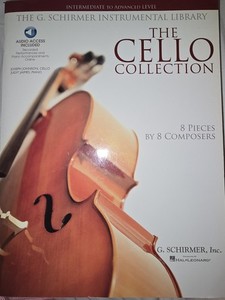
I have some music book sales on eBay today as I raise funds for my uni course. Lots more on the way! The Cello Collection Hal Leonard G Shi...
-
 Purchase via the Digitalia Engine The iServalan™ Poster Shop Bold. Playful. Electric. 100% Creative Kudos Welcome to The iServalan™ Poste...
 -
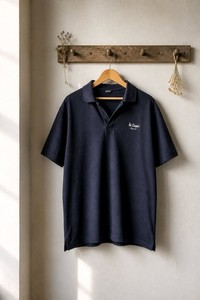
The Cry-Eye (Cyan Insignia Caste III — The Signal-Seers Tank Top £17.14 £21.44 (20% off) The Warren-Crest Yellow Insignia Caste Vlll — The E...

