Music School

Music School
Focusing on Scales and Chords for Piano and Strings

Search This Blog

Saturday, August 15, 2026

The Delamaré Music Continuum is an adaptive, pressure-free framework for musical learning created by Sarnia de la Maré.

 The Continuum Music Framework shifts from the hierarchical, goal-oriented structure of traditional grading systems (such as ABRSM or Trinity College London) to an fluid, experiential model. Traditional systems rely on linear milestones—progressing from Initial or Grade 1 up to Grade 8—with strict testing on specific pieces, technical scales, sight-reading, and aural memory. In contrast, the Continuum framework views musical development as an unfolding ecosystem driven by emotional safety and personal resonance rather than external validation. [1, 2, 3, 4] 

Feature / DimensionTraditional Music Grading (e.g., ABRSM/Trinity)Continuum Music Framework (Sarnia de la Maré)
StructureLinear and hierarchical (Grades 1–8)Non-linear and continuous
Core MetricAccuracy, technical precision, and exam pass marksResonance, personal agency, and expression
RepertoirePrescribed syllabus lists (often canonical/classical)Open-choice, fluid, and genre-independent
EvaluationExternal examiner judgment (Pass, Merit, Distinction)Self-coherence and internal feedback
MotivationExtrinsic (qualifications, UCAS points, certificates)Intrinsic (curiosity, wellbeing, lifelong connection)

Key Structural Differences

  • Ladders vs. Landscapes: Traditional frameworks treat learning like climbing a ladder where each rung represents a harder set of technical demands. The Continuum framework treats music like an open landscape or continuous flow state, removing terms like "beginner" or "advanced" that can trigger performance anxiety. [3, 5, 6, 7] 
  • Standardised Repertoire vs. Instinctive Expression: Graded exams force students to master a tight selection of set pieces evaluated for absolute correctness. The Continuum approach encourages alternative pathways—such as visual image scores or playing by ear—where the goal is physical and emotional connection to sound rather than flawless notation decoding. [1, 6, 8] 
  • External Pressure vs. Psychological Safety: Traditional grades carry high-stakes outcomes that can alienate neurodivergent or stressed learners. The Continuum method prioritises nervous-system safety and self-pacing, making music accessible to individuals who struggle with rigid institutional checks. [3, 6, 9, 10, 11] 
If you'd like, I can explore:
  • How to balance exam preparation with intuitive playing
  • Specific strategies for neurodivergent learners using flexible frameworks
Let me know how you'd like to continue this discussion.

Why Physics Matters in Music: Gravitational Pull, Forces, and Kinetic Energy The De la Maré Music Continuum A Pedagogy for the 21st Century

The De la Maré Music Continuum | Adaptive, Pressure-Free Music Learning Framework by Sarnia de la Maré 


Why Physics Matters in Music: Gravitational Pull, Forces, and Kinetic Energy in the Continuum Approach

In Continuum Music Pedagogy, we begin with something many traditional methods overlook or delay: the simple physics of how sound is made and how our bodies interact with instruments. From the earliest stages—whether with a young child or an adult returning to music—we explore gravitational pull, the forces at play, and the accumulation and direction of kinetic energy. We do this in everyday language, using images and feelings rather than equations, because these principles shape tone, ease, expression, and long-term freedom at the instrument.

Surprisingly, many adults have never been given clear, practical understanding of these ideas. They may play for years with tension, inefficient movement, or unexplained fatigue simply because no one showed them how gravity, force, and energy actually work when a bow meets a string or a finger meets a key. Continuum treats this knowledge as foundational, not advanced. Understanding it early creates safer technique, richer sound, and a more intuitive relationship with the instrument.

Gravity as a Partner, Not an Obstacle

Gravity is constant. It pulls everything downward. On a string instrument, the weight of the arm and bow can rest into the string rather than being held up by muscular effort. When a player learns to allow gravitational pull to contribute to bow pressure, the sound gains depth and the body works less. The bow becomes an extension of a free, weighted arm instead of a tool that must be forced downward.

On the piano, the same principle applies. The natural weight of the arm and hand can drop into the key. Fighting gravity by lifting and pressing with isolated finger strength creates stiffness and limited dynamic range. Allowing gravity to assist produces a warmer, more resonant tone and reduces the risk of strain. We introduce this to children with simple images—“let your arm be heavy like a soft bag of sand” or “feel the earth pulling your hand gently toward the keys”—so the concept becomes felt experience rather than abstract theory.

Forces and the Transfer of Energy

Every sound begins with force applied in a particular direction and with a particular amount of energy. On a bowed string instrument, the bow applies lateral force across the string while the string’s tension resists and then responds. The interaction sets the string into vibration. Too little force and the sound is weak or scratchy; too much, and the string is crushed, producing a harsh or choked tone. The player must sense the balance point where force and string response meet efficiently.

Kinetic energy—the energy of motion—builds as the arm and bow move. That energy has to go somewhere. Ideally, it transfers cleanly into the string’s vibration, then into the instrument’s body, and finally into the air as sound. When the energy is blocked by rigid joints, excessive grip, or misaligned posture, it stays in the body as tension or dissipates as noise rather than tone.

On the piano, the sequence is similar but sequential. Kinetic energy accumulates in the arm and fingers, travels through the key, is transferred to the hammer, and strikes the string. The string vibrates, the soundboard amplifies, and the energy becomes audible sound. Understanding “where the energy needs to go” helps players release excess force after the attack instead of holding tension in the hand or forearm. The result is clearer articulation, greater control of dynamics, and far less physical cost.
Why Introduce These Ideas So Early?

Children absorb these concepts easily when they are presented simply and playfully. They already experience gravity every time they drop a ball or lean into a swing. Naming the same forces at the instrument makes technique feel natural rather than imposed. Adults often arrive with years of compensatory habits—lifting shoulders, gripping bows or keys, pushing instead of allowing. Revisiting the basic physics gives them a clear map for undoing those habits. Many report sudden clarity: “I never realized I was fighting the weight of my own arm” or “I was dumping energy into my wrist instead of sending it into the sound.”

This early understanding supports the Continuum philosophy of resonance over correctness and agency over compliance. When a player knows how gravitational pull, applied force, and kinetic energy interact, they gain tools for self-adjustment. They can listen to the instrument’s response and refine their movement without constant external correction. Technique becomes exploratory rather than corrective.
Practical Outcomes for PlayersString players develop freer bow arms, more consistent contact points, and the ability to vary pressure and speed with intention rather than tension. 
Pianists learn to use arm weight for power and release for speed, reducing the risk of injury while expanding dynamic and tonal range. 
Both groups gain a deeper sense of the instrument as a physical system that responds to clear, efficient energy transfer. Sound improves because energy is directed rather than scattered.

These principles do not replace musical imagination, listening, or repertoire. They support them. A player who understands the physics can more readily translate musical intention into physical action. The body becomes a reliable collaborator instead of an obstacle.

In Continuum Music Pedagogy we return to these ideas repeatedly, at every stage of learning, because the body and the instrument are always subject to the same physical laws. Gravity does not change with age or ability. Kinetic energy still needs a clear path. By meeting these realities early and simply, we equip musicians of every age with tools that last a lifetime—tools that foster ease, resonance, and the freedom to explore sound without unnecessary struggle.

The Continuum is not a race toward technical perfection. It is a living relationship with sound, grounded in the physical realities that make sound possible. Understanding gravitational pull, forces, and the journey of kinetic energy is one of the quiet foundations that make that relationship sustainable, expressive, and joyful.

Clarified kinetic energy transfer examples (kept in the simple, accessible language used in Continuum)

Kinetic energy is simply the energy of something that is moving. In playing, that movement starts in the body (arm, hand, fingers) and must travel efficiently into the instrument so it becomes sound instead of staying locked in the body as tension or being wasted as noise/heat.

String instruments (violin, viola, cello, bass – bowed)

  1. Building the energy
    You move your arm and bow. That motion creates kinetic energy in the arm + bow system.
  2. Transfer point
    The bow hair contacts the string and applies force across it. The moving bow “hands over” its kinetic energy to the string. The string is under tension (like a stretched rubber band), so it springs into vibration.
  3. Where the energy goes next
    • Most of it becomes the string’s rapid back-and-forth motion (vibration). 
    • That vibration travels into the bridge, then the body of the instrument, which amplifies it and pushes air molecules → sound waves we hear. 
    • A small amount is lost as heat from friction between bow hair and string, or as unwanted noise if the contact is too hard or too light.

Simple image for children / adults:
Think of pushing a swing. Your arm’s moving energy goes into the swing. If you push smoothly and at the right moment, the swing flies high (good sound). If you shove awkwardly or hold on too tight, energy stays in your arm or the swing just jerks (scratchy tone or tension).

Practical check: After a long note, does your arm feel free and empty, or still “holding” something? Free = energy transferred cleanly. Holding = energy got stuck in the body.

Piano

  1. Building the energy
    Arm weight + finger movement creates kinetic energy that travels downward toward the key.
  2. Transfer chain (this is sequential and very clear) 
    • Finger → key: kinetic energy moves the key downward. 
    • Key → whippen / action parts → hammer: the key’s motion is mechanically transferred and usually accelerated (the hammer flies faster than the key). 
    • Hammer → string: the moving hammer strikes the string and delivers its kinetic energy in a short impact. 
    • String vibrates → soundboard amplifies → air → sound.
  3. Where the energy needs to go / release
    Once the hammer has struck, the remaining energy in the finger/arm should be released (the key can rebound, the hand can stay soft). If the player keeps pressing hard after the sound has started, that leftover energy stays in the hand, wrist, or forearm as tension instead of contributing to tone.

Simple image:
It’s like throwing a small ball at a drum. You build speed in your arm, release the ball (hammer), it hits the drum skin (string), and the energy becomes the boom. If you keep gripping the ball after throwing, your hand stays tight for no reason.

Practical check: After the note speaks, can the hand rest lightly or float? Or is there still downward pressure and tightness? Light/floating = energy has left the body and gone into the sound.

Shared Continuum principle

In both instruments the goal is the same:
Let kinetic energy accumulate in a free, natural way (using gravity and good alignment), then give it a clear path into the instrument, and finally let go so none of it remains trapped in the body.

When the transfer is clean, the sound is fuller, the body stays easier, and the player can shape dynamics and tone with far less effort. This is why Continuum introduces these ideas very early—in simple pictures and felt experiences—so both children and adults can sense “where the energy needs to go” long before technical jargon appears.

About The De la Maré Music Continuum | Adaptive, Pressure-Free Music Learning Framework by Sarnia de la Maré A Pedagogy for the 21st Century

The De la Maré Music Continuum 

The De la Maré Music Continuum is an adaptive, pressure-free framework for musical learning created by Sarnia de la Maré.

It understands sound not as a ladder of achievements to be climbed, but as a living field that can be entered, explored, and returned to across a lifetime. Rather than separating technique, theory, improvisation, composition, and listening into rigid hierarchical stages, the Continuum treats them as interdependent behaviours that emerge at different intensities according to context, nervous system, age, intention, and individual capacity. Progress is measured by clarity, comfort, sustained engagement, and the growth of agency, not by speed or comparison.

At its core the Continuum privileges resonance over correctness, agency over compliance, and time over urgency. It rejects fixed categories of “beginner” and “advanced,” recognising that the same material—an open string, a single gesture, a sustained drone, a visual line—can hold equal musical truth for a child encountering music for the first time, an adult returning after years away, a neurodivergent learner, or an experienced performer. Learning stabilises when safety replaces pressure, listening precedes performance, and curiosity is allowed to lead. The framework is not a method to be completed but an architecture of rooms: flexible spaces that invite entry, return, and deepening for every kind of musician.

Who the Continuum Serves

The De la Maré Music Continuum is designed for the widest possible range of learners. It works with children of diverse abilities, including those with special educational needs, sensory processing differences, and neurodivergence. It supports adult beginners and returning players who need emotional safety and permission to sound without judgement. It welcomes instrumentalists, vocalists, composers, and self-directed learners across instruments and traditions. Because the same principles of small steps, attentive listening, and embodied contact apply equally to all, the Continuum functions both as a primary developmental pathway and as a complementary toolkit that integrates seamlessly with other methods—Suzuki, Kodály, Orff, traditional classical training, or any structured curriculum—without conflict.
Core Ethos and Practices

Listening is foundational. Before fingers, bow, or voice are asked to produce, the ear is invited to notice stability, tension, beating, and the moment resonance settles. Scales become living maps of orientation rather than ladders of speed. The “add one note” approach explores a single pitch through articulation, dynamics, emotion, bow direction, and colour, then gradually expands, amplifying skill through small, fully inhabited increments. Embodiment is primary: the physical relationship with the instrument, breath, movement, dance, body percussion, and spatial awareness (including continuous pathways such as the orbit) are cultivated from the beginning rather than postponed. Composition, improvisation, and creative decision-making are introduced early so that agency and musical identity develop alongside technique.

Visual and image scores form a distinctive practical resource. These non-prescriptive scores—often a clear line or shape on a quiet dark ground—offer direction, density, contour, and contrast rather than fixed pitches or rhythms. The eye follows the path; the body and impulse decide how sound travels. Time becomes flexible. Pitch becomes relative. Such scores reduce visual overload for many neurodivergent learners, restore listening, dissolve the boundary between improvisation and composition, and work equally well for solo or group settings across instruments and voices.

Free vocal linguistics treats the voice as a thinking instrument capable of generating musical material, emotional structure, and semantic suggestion before words are fixed—and sometimes without words at all. Spoken word, provisional syllables, scat, chant, and sustained vowels become low-pressure routes into breath awareness and vocal confidence. The Continuum premise that nothing is simply “not good” removes the ideas that hold performers back. Breathing, central to all Continuum musicianship, becomes the natural starting point for voice work. Lyrics, when they arrive, are chosen for fit rather than cleverness; the voice retains agency.

Digital Tools and the Human Centre

Digital learning tools are valued for distance learning, global access, and egalitarian reach. They support practice, refine listening, and maintain continuity of relationship when physical presence is impossible. Algorithms, synthesis, and adaptive interfaces have long been part of creative electronic and experimental music; contemporary AI can open genuine pathways for musicians whose physical circumstances limit conventional technique. Yet the hierarchy remains clear: tools enhance performance; the human factor—personality, idiosyncrasy, the particular body’s history of listening and living—stands at the summit of excellence. Generic systems that optimise for probability cannot substitute for presence. Continuum is oriented toward the present and the emerging future. Computation belongs in the toolkit of human musicians; creativity, healing, and the elevation of existence through the act of performing remain the aim.

Microtones, Cultural Openness, and Cross-Traditional Work

Pitch is treated as a continuum. Vibrato itself is continuous microtonal motion around a centre. Many non-Western traditions—Arabic and Turkish maqam, Indian raga and shruti systems, Indonesian gamelan, various African equi-tonal practices—regard finer intervals as structural rather than exceptional. Digital tools that default to equal temperament can conflict with this flexibility, quantising or rejecting nuance as “out of tune.” Continuum encourages tools configured to honour continuous pitch and places listening above any single grid. As a Western-oriented framework with classical roots, the Continuum does not claim to teach other cultural grammars from outside. Instead it offers complementary principles—deep listening, small attentive adjustments, resonance, agency, and permission—that can support learners already working within other traditions and enable respectful collaboration without hierarchy or assimilation.

Neuroplasticity, Safety, and Lifelong Continuity

Adult brains remain capable of meaningful reorganisation. Deliberate, emotionally safe, multisensory practice supports structural and functional change in auditory-motor networks. Continuum’s emphasis on small steps, reduced threat, intrinsic reward, and consistent returning creates conditions that favour this plasticity, particularly for neurodiverse adult students whose processing styles benefit from predictability, low evaluative pressure, and sensory-based feedback. For children the same conditions allow composition, ear skills, and embodiment to develop early, building internal maps that later technical work can inhabit rather than invent.

About the Creator

Sarnia de la Maré FRSA is a multi-instrumentalist, educator, author, and the originator of the Continuum Approach. Her work focuses on confidence and creative wellbeing, neurodiversity-aware learning, sustainable practice, long-term musical development, and artistic, reflective musicianship. The De la Maré Music Continuum grows from decades of teaching and creative practice and is designed to restore curiosity, agency, and a living relationship with sound for musicians of every age, ability, and background.

The Continuum is not a syllabus to finish. It is a framework to grow within—one that values continuity over perfection, care over compliance, and learning as a lifelong, adaptive process. Whether used as a primary pathway or as a complementary set of tools, it invites every learner to enter the field of sound with safety, attention, and the quiet freedom to belong.

The De la Maré Music Continuum is supported by a growing library of practical tools and supplementary materials. A number of these resources are already published and available; further scores, studies, recordings, and teaching materials continue to be developed and will be released as the framework expands.


£6.52
£8.66
£7.59
£8.66
£8.66
£6.52
£9.73
£7.59
£9.73
£6.52
£8.66
£9.73
£10.80
£8.66
£9.73
£8.66
£47.50
£8.66
£9.73
£7.59
£7.59
£9.73
£9.73
£10.80
£8.66
£6.52
£17.22
£9.73
£10.80
£8.66
£6.52
£104.70
AGA
£5.45
£8.66
£10.80
£8.66
£7.59
£12.94
£11.87
£16.15
£8.66
£9.73
£7.59
£9.73
£9.73
£8.66
£10.80
£52.70
£6.52
£9.73
£1.16
£7.59
£7.59
£10.80
£9.73
£26.70
£5.45
£8.66
£9.73
£9.73
£7.59
£7.59
£10.80
£6.59
£9.73
£9.73
£9.73
£12.94
£10.80
£12.94
£8.66
£8.66

Preloved Music Books in the Blink Friction eBay Shop

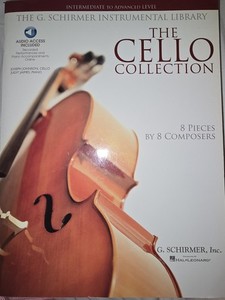
I have some music book sales on eBay today as I raise funds for my uni course. Lots more on the way! The Cello Collection Hal Leonard G Shi...

FRIX at Blink Friction