Music School

Music School
Focusing on Scales and Chords for Piano and Strings

Search This Blog

Saturday, February 28, 2026

What’s the Score? Why Visual Music Scores Might Be a Good Fit For Autistic Music Students | Continuum Approach

The De la Maré Music Continuum | Adaptive, Pressure-Free Music Learning Framework


Black background, Coloured Line: Visual Processing, Autism, and Open Scores

For many autistic people, perception is not a neutral backdrop but an active, often intense experience. Visual information arrives with weight, texture, and emotional charge. Where neurotypical design often assumes that white space is calming and clarity lies in brightness, autistic perception frequently responds in the opposite way. High-contrast white backgrounds, dense notation, and visual clutter can overwhelm the nervous system, creating cognitive fatigue before any meaningful engagement begins.

Black or dark backgrounds, by contrast, reduce overall luminance. They quiet the visual field. Instead of light flooding the eye, forms emerge gently, with edges that feel contained rather than invasive. For many autistic individuals, this reduction in brightness lowers sensory load, allowing attention to settle rather than scatter. The background recedes, and what remains becomes deliberate.

Colour, when used sparingly and intentionally against a dark ground, takes on a different role. Rather than competing for attention, it becomes a guide. Autistic perception often favours pattern recognition, relational thinking, and continuity over symbolic abstraction. Colour coding supports this by providing immediate, non-verbal structure. It does not require translation into language or rules; it is understood directly.

In this context, coloured lines are not decorative. They are functional. A green line may suggest continuity, growth, or grounding. A red line may suggest intensity, alertness, or change. These associations are not fixed or prescriptive; they are experiential. The performer does not need to be told what the colour means. The nervous system responds before conscious interpretation occurs.

This is particularly important in musical notation. Traditional scores demand layered decoding: pitch, rhythm, articulation, dynamics, and expression must all be processed simultaneously, often at speed. For autistic musicians, this can create a bottleneck where cognitive effort eclipses listening. The act of reading becomes dominant, and sound becomes secondary.

Line-based graphic scores reverse this hierarchy. A single line on a dark ground removes symbolic overload and restores temporal flow. The eye follows the line as it would follow a path, a gesture, or a breath. There is no requirement to “translate” the image into correct notes. Instead, the image invites a response.

This kind of visual language aligns closely with autistic strengths. Many autistic individuals process information holistically rather than sequentially. They perceive movement, contour, density, and change as integrated experiences. A continuous line that rises, falls, thickens, or fractures can be understood immediately as motion, tension, release, or stillness. The performer is not asked to remember rules but to remain present.

Black backgrounds further support this mode of engagement by removing visual noise. There are no margins to manage, no staff lines to track, no competing symbols. The image floats in space. Attention can rest on it without effort. This creates a sense of safety, which is essential for musical risk-taking. When the nervous system feels safe, listening deepens. When listening deepens, expression follows.

Colour coding also supports memory without pressure. Instead of remembering instructions, the performer remembers sensations: the green section felt expansive; the red section felt charged; the thin line required restraint; the spiral invited immersion. These memories are embodied rather than verbal. They remain accessible even when executive function fluctuates.

Importantly, these scores do not demand eye contact, rapid decision-making, or social interpretation. They can be engaged with privately or collectively, without hierarchy. In group settings, this removes many of the social stresses that autistic musicians often experience in ensembles. Everyone follows the same image, but each response remains individual. Difference is not corrected; it is expected.

For autistic adults in particular, this approach offers a rare permission: to make sound without performing correctness. There is no wrong tempo, no wrong pitch, no failure to keep up. The score does not judge. It simply exists. This reduces masking, allowing the musician to respond as they are rather than as they think they should be.


These line scores, along with other image based scores, are therefore not simplified versions of traditional


notation. They are a different epistemology altogether. They prioritise perception over prescription, sensation over symbol, and presence over outcome. In doing so, they create a musical space that is accessible, dignified, and deeply expressive for autistic musicians — and, often unexpectedly, liberating for everyone else as well.


© 2026 Sarnia de la Maré FRSA
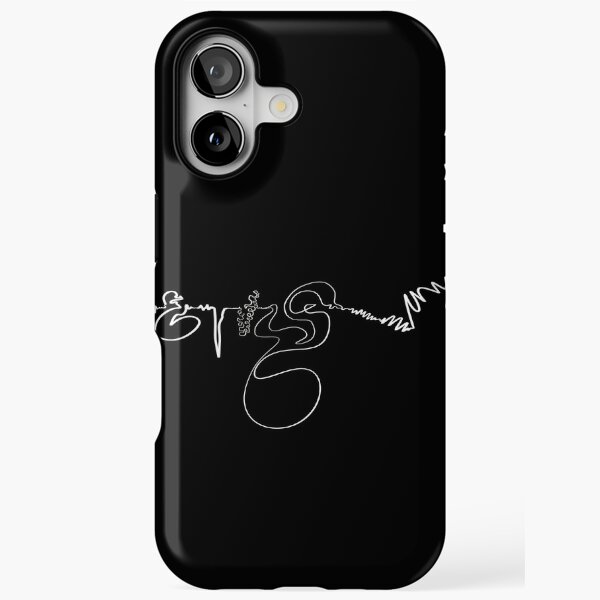
Continuum Line Score — Solo All Instruments and Dance Movement by iServalan iPhone Tough Case
£29.83
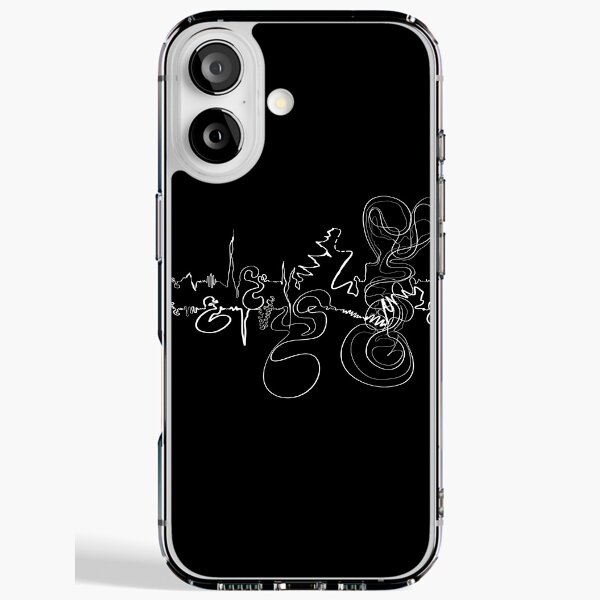


Continuum Line Score — Double Piano by iServalan Alternative Music Scores iPhone Soft Case
£25.71
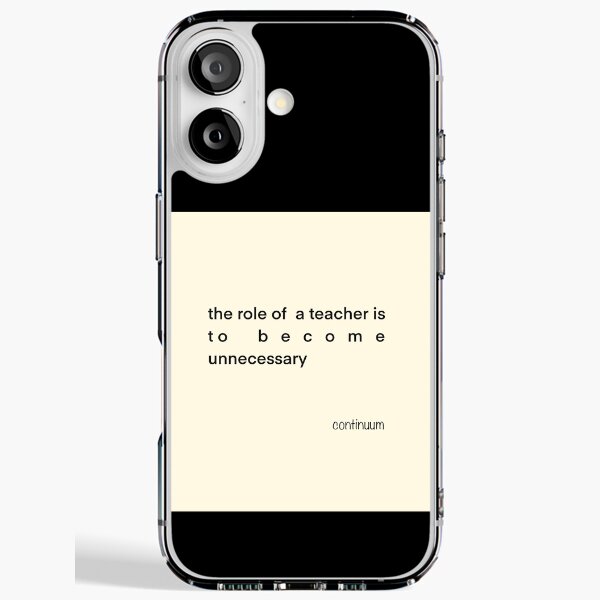


Teacher Apparel Continuum Music Approach iServalan iPhone Soft Case
£25.71


there is no i in orchestra | iServalan | Continuum Samsung Galaxy Soft Case
£20.01


Learning collapses when fear enters Continuum Approach iServalan iPhone Soft Case
£25.71


Immersion Cinema Movie Still by iServalan for BOI Transmissions by Sarnia de la Maré iPhone Tough Case
£29.83



Minor Matter Music Video Still by iServalan Book of Immersion iPhone Tough Case
£29.83


The Algea Coloured Art by iServalan for BOI by Sarnia de la Maré iPhone Soft Case
£25.71



The Fly Queen by iServalan Hyper Moving Liquid Style in Full Colour from BOI by Sarnia de la Maré iPhone Tough Case
£29.83


Crying Rabbit by iServalan for Neuro Books by Tale Teller Club Press iPhone Snap Case
£24.76


Immersion Static – Strata 1 Ep 5 VISIONS (Crime-Zone Analogue Sci-Fi Poster no text) Samsung Galaxy Soft Case
£20.01


Immersion Static – Strata 1 Ep 5 Visions (Analogue Surveillance Poster with text) iPhone Tough Case
£29.83



BOI Strata 1 Movie Still by iServalan Renyke is Old iPhone Snap Case
£24.76



Sketching the News — #3: Trumping Through the Epstein Files iPhone Snap Case
£24.76



Sketching the News — #2: Britain Copies Denmark Without Reading the Instructions iPhone Tough Case
£29.83



Sketching the News — #1: Trump, the BBC, and the Licence Fee Shake-Down iPhone Snap Case
£24.76



Donald Trump Schoolboy Caricature for Politica UK Cartoons iPhone Tough Case
£29.83



The War Crown: Blair and Trump Attend Cheney’s Funeral (2025) iPhone Soft Case
£25.71


Dog’s Blx no 3 by iServalan DIGITAL AURA Artwork iPhone Soft Case
£25.71


Dog’s Blx no 2 by iServalan AURA Exhibition Art iPhone Soft Case
£25.71



Dog’s Blx no 1 Digital AURA Exhibition Artwork by iServalan Samsung Galaxy Soft Case
£20.01



Goth Girl by iServalan for Tale Teller Club Press iPhone Soft Case
£25.71



Angry Punk Girl by iServalan for Tale Teller Club Press Samsung Galaxy Soft Case
£20.01




From Being Taught to Self Motivated Practice - A Continuum Approach to Music

The De la Maré Music Continuum | Adaptive, Pressure-Free Music Learning Framework


From Taught to Self-Directed: A Continuum Approach to Musical Practice

The purpose of musical teaching is not permanence.
It is passage.

Yet much of music education behaves as though the opposite were true: as though the teacher were meant to remain central, visible, directive—an ongoing authority whose presence is required for progress to continue. In such models, practice is assigned, monitored, corrected, and measured. Motivation is managed. Independence is promised later.

The Continuum Approach begins from a different assumption: that teaching exists to make itself gradually unnecessary.

Practice, in this view, is not a task handed down, but a capacity that must be grown. It is not sustained by supervision, but by understanding. A student who practises only when instructed has not failed; they have simply not yet been taught what practice actually is.

Practice and the Problem of Compliance

The word practice is often used imprecisely. It is treated as synonymous with repetition, obedience, or time spent. A student is said to “practise well” if they complete what was assigned, for the duration requested, with visible effort.

But this definition collapses the moment the teacher steps away.

Practice that depends on enforcement is not practice at all—it is rehearsal for assessment. It produces short-term compliance rather than long-term musicianship. When external pressure is removed, the activity dissolves, leaving confusion, guilt, or avoidance in its place.

This is not a failure of character or discipline. It is a failure of pedagogy.

Learning as a Continuum

Educational research has long understood learning as a continuum: from guided experience toward independent agency; from external structure toward internal motivation. Yet music education frequently interrupts this continuum by delaying autonomy, deferring choice, and confusing control with care.

Students are often told they will “understand later,” “choose later,” or “compose later,” once they have demonstrated sufficient obedience to the system. Independence is treated as a reward for endurance rather than a condition for engagement.

The result is a generation of musicians who have been taught what to play, but not how to practise without instruction—or why they might wish to.

Where Traditional Models Break Down

Many conventional approaches retain the teacher as the primary source of authority for too long. Correction precedes curiosity. Targets replace orientation. Silence and compliance are mistaken for progress.

In these environments, students may become highly trained yet strangely dependent—technically capable, but uncertain how to begin without permission. When practice stalls, it is framed as a motivational issue rather than a structural one.

But motivation cannot be commanded. It emerges only when a student recognises meaning, direction, and ownership in what they are doing.

The Continuum Position

Within the Continuum Approach, independence is not postponed. It is present from the beginning.

Students are introduced early to:

  • choice within structure

  • exploration before correction

  • composing alongside learning

  • familiarity with the full landscape of the instrument

This is not an abdication of guidance. It is a reordering of priorities.

Orientation comes before expectation. Scope comes before precision. Understanding precedes repetition. The student is not asked to obey an abstract standard, but to enter into a relationship with sound, space, and movement.

Independence is not the end goal of learning—it is the medium through which learning occurs.

Motivation as a By-Product

The Continuum does not attempt to “motivate” students through reward, pressure, or fear of falling behind. These tools may produce activity, but they rarely produce attachment.

Instead, motivation arises as a by-product of clarity and safety. When students understand their instrument, recognise their own progress, and feel a sense of ownership over sound, practice ceases to be something imposed. It becomes something chosen.

This shift is subtle but decisive. Practice moves from public to private—from performance for approval to exploration for oneself.

The Disappearing Teacher

The ethical teacher plans for their own disappearance—not through abandonment, but through careful withdrawal. Guidance becomes lighter. Authority becomes shared. Eventually, the student no longer needs to ask whether they should practise. They already know how.

This is not a loss. It is the success of the work.

The Continuum Approach does not ask when a student is ready to practise independently. It assumes they always were, and asks instead what conditions are required for that independence to emerge safely and sustainably.

Teaching, then, is not the art of control, but of release.

And practice, at last, becomes what it was always meant to be: a private act of attention, curiosity, and self-directed growth.

Sunday, February 8, 2026

🌿 Continuum Studio — Personalised Online Music Sessions with Sarnia de la Maré FRSA

The De la Maré Music Continuum | Adaptive, Pressure-Free Music Learning Framework

🌿 Continuum Studio — Personalised Online Music Sessions

I offer one-to-one online music sessions using the Continuum Method — a personalised, pressure-free approach to learning and creative development.

Sessions adapt to individual learning styles, personalities, and creative temperaments, with a strong focus on confidence, curiosity, and long-term musical wellbeing.

Alongside teaching, I’m developing this work as part of my wider creative and educational practice, including my books and research-based projects.

📚 Related books and resources are available via my author catalogue. www.sarniadelamare@gmail.com

🌿 Book a Continuum Session (£10)

📅 Choose a time: Google Calendar

Sessions are delivered internationally online. Private, supportive, and not recorded.


🌿 Continuum Studio — Online Pilot Session (30 Minutes) 

These one-to-one sessions introduce students to the Continuum Method: a personalised, pressure-free approach to learning strings and piano. 

Teaching combines core musicianship with adaptive methods shaped around individual learning styles, personalities, and creative temperaments. 

Each student therefore receives a highly individual experience, designed to support confidence, curiosity, and long-term musical wellbeing. Sessions are delivered internationally via Zoom. 

For students under 16, a parent or responsible adult must be present in the home and aware of the session. Lessons are private and not recorded, in order to protect focus, confidence, and genuine musical exploration. 

All students receive free access to selected Continuum scores and learning materials to support independent practice between sessions. 

What’s Included
 • 30-minute personalised Zoom session 
• Individualised exercises and guidance 
• Access to Continuum scores and resources 
• Optional written practice notes 
• Calm, supportive learning environment Studio Phase Rate £10 per 30-minute session (Founders Rate) 
Places are limited to keep the work focused and personal.

I will consider groups, children's orchestras etc. Please get in touch for more information.

Tuesday, January 27, 2026

The Undulating Practice Method | De La Maré Music Continuum, A 21st Century Pedagogy


═══════════════════════════════════════════════════════════════
          THE UNDULATING PRACTICE METHOD
     Modular Exploration in the De la Maré Music Continuum
═══════════════════════════════════════════════════════════════

                    ┌─────────────────┐
                    │   ATTRACTION    │
                    │  (Interest /    │
                    │   Curiosity)    │
                    └────────┬────────┘
                             │
                             ▼
                    ┌─────────────────┐
                    │   IMMERSION     │
                    │  (Deep focus,   │
                    │   technique,    │
                    │   language)     │
                    └────────┬────────┘
                             │
                             ▼
                    ┌─────────────────┐
                    │   EXPANSION     │
                    │  (Variations,   │
                    │   combinations, │
                    │   testing)      │
                    └────────┬────────┘
                             │
                             ▼
                    ┌─────────────────┐
                    │  REFINEMENT     │
                    │  (Selection,    │
                    │   editing,      │
                    │   structure)    │
                    └────────┬────────┘
                             │
                             ▼
                    ┌─────────────────┐
                    │  RESOLUTION     │
                    │  (Coherent      │
                    │   completion)   │
                    └────────┬────────┘
                             │
                             ▼
                    ┌─────────────────┐
                    │   ARCHIVING     │
                    │  (Intentional   │
                    │   shelving)     │
                    └────────┬────────┘
                             │
                             ▼
                    ┌─────────────────┐
                    │     RETURN      │◄──────────────────────┐
                    │  (Re-entry with │                       │
                    │   greater skill │                       │
                    │   & perspective)│                       │
                    └────────┬────────┘                       │
                             │                                │
                             └────────────────────────────────┘
                                      (New Cycle Begins)

───────────────────────────────────────────────────────────────
Key Principles

• Cycles are modular — each phase is a self-contained “room”
• Return is advancement, not regression
• Projects are completed and archived, not abandoned
• Depth accumulates through iteration rather than linear progress
• Assessment is internal: coherence over compliance

───────────────────────────────────────────────────────────────
Connection to the Continuum Architecture

Foundations → Orientation → Building Rooms → Integration → Transmission

Each undulation constructs and furnishes a new room.
Over time the rooms interconnect into a living creative ecosystem.
═══════════════════════════════════════════════════════════════
The De la Maré Music Continuum | Adaptive, Pressure-Free Music Learning Framework
How Modular Exploration Builds a Lifelong Creative Continuum

Across disciplines, serious creative work rarely develops in straight lines. It evolves through cycles of curiosity, immersion, refinement, and return. Within the De la Maré Music Continuum this process is understood as undulating practice: a method of sustained, modular exploration in which ideas are entered deeply, developed fully, and then temporarily set aside—not abandoned, but archived—for future reactivation. Undulating practice functions simultaneously as a self-directed learning system, a creative research methodology, and a foundation for long-term artistic resilience.

The undulating cycle moves through recurring phases that build upon one another. An idea, material, or question first generates sustained interest—the phase of attraction. This is followed by immersion, a period of focused exploration of technique, language, and context. Expansion then tests variations, combinations, and applications. Refinement brings selection, editing, and structural consolidation, leading to resolution: the completion of a coherent body of work or skill set. The module is then intentionally archived. Later, the practitioner may return to it from a position of greater experience and perspective. Rather than progressing linearly, the musician or artist moves through these cycles repeatedly, accumulating depth through iteration.

This approach mirrors the modular structure of traditional higher education, yet operates organically and autonomously. Each creative phase functions as a self-designed module that combines research, experimentation, technical development, reflection, and, where appropriate, public presentation. The decisive difference is that the practitioner determines pace, depth, and duration. Learning remains responsive rather than prescriptive, able to expand or contract according to the demands of the material and the capacity of the individual.

A dense, multi-layered portfolio does not arise from constant productivity but from repeated cycles of genuine completion. Projects are finished rather than abandoned; techniques are stabilised rather than merely sampled; ideas are resolved before they are shelved. Over time the resulting body of work reflects intellectual and technical continuity instead of fragmentation. Revisiting earlier material is frequently misread as indecision or nostalgia. Within undulating practice, return functions as advancement. Each re-entry occurs from a position of greater skill, broader context, and more refined judgement. Earlier work becomes a testing ground for new techniques, a comparative benchmark, a site of reinterpretation, and a living archive. Return therefore enables cumulative learning without mere repetition.

Sustained creative development requires periods of relative withdrawal from distraction. Practitioners of the undulating method typically organise their lives around exploration, minimising competing demands in order to preserve cognitive and emotional bandwidth. This is not an absence of activity but an intentional devotion to long-form attention. Depth replaces dispersion. Assessment, too, is internal and meaning-based. A phase reaches completion when techniques feel embodied, conceptual aims are satisfied, outputs feel structurally coherent, and further work would become repetitive. Completion is recognised through coherence rather than through external compliance.

Because undulating practice builds multiple resolved modules, it generates long-term resilience. When one area stagnates, others remain active. When motivation falters, the archive of completed work provides grounding and continuity. Dependency on trends, platforms, or external validation diminishes. The practitioner becomes structurally self-supporting.

Within the Continuum framework, undulating practice connects directly to the larger progression from Foundations through Orientation, the building of Rooms, Integration, and Transmission. Each undulation constructs a new room within the creative architecture. Over time these rooms interconnect, forming a navigable ecosystem of skills, languages, and methodologies.

The method holds particular pedagogical value for neurodivergent learners, interdisciplinary practitioners, independent artists, late starters, and those returning to music after interruption. By legitimising cyclical rather than linear development, it reduces the pressure for constant novelty and supports sustainable mastery. Undulating practice reframes creative life as an ongoing research continuum rather than a sequence of isolated projects. Through patient cycles of immersion, completion, archiving, and return, practitioners build durable knowledge systems grounded in lived experience. Serious creative development is not accelerated by haste; it is deepened through recursive engagement. The portfolio that results is not merely a record of output but evidence of a life in continuous practice.


Sunday, January 11, 2026

Why Musical Instrument Strings Wear Out — and How to Make Them Last Longer

 The De la Maré Music Continuum | Adaptive, Pressure-Free Music Learning Framework

Why Strings Wear Out — and How to Make Them Last Longer

Every string player reaches the same quiet moment:
the instrument is still in tune, technique feels fine — but the sound has lost its sparkle.
The string hasn’t broken. It’s simply worn out.

Strings don’t fail suddenly. They deteriorate slowly, for very practical reasons.


1. Constant Tension and Metal Fatigue

All string instruments rely on metal strings held under continuous high tension. From the moment a string is fitted, it begins ageing.

Over time:

  • The metal core stretches microscopically

  • Elasticity decreases

  • The string vibrates less freely

This is normal wear, not a fault — even in the most expensive strings.


2. Vibration and Playing Wear

Every note flexes the string thousands of times. This repeated movement causes metal fatigue, especially in the core.

As this builds up:

  • Overtones disappear first

  • The sound becomes dull or flat

  • Response feels slower and less reliable

A string can look fine but already be past its best.


3. Rosin Buildup and Surface Damage

Rosin allows the bow to grip the string, but it is mildly abrasive.

With time:

  • Rosin embeds in the winding

  • The surface becomes clogged

  • Bow contact becomes uneven

This leads to scratchy attacks, poor articulation, and a sense that the sound won’t settle.


4. Sweat, Oils, and Corrosion

Human skin introduces moisture, oils, and salts.

These cause:

  • Corrosion in the winding

  • Damage in high-use fingered areas

  • Faster deterioration on upper strings

Some players naturally wear strings faster due to hand chemistry alone.


5. Wear at Contact Points

Strings suffer most where they bend and rub:

  • At the nut

  • Over the bridge

  • Against the fingerboard

Dry, sharp, or poorly cut grooves increase friction and shorten string life significantly.


How to Make Strings Last Longer While Playing

  • Wipe strings gently with a dry cloth after every session

  • Use only as much rosin as necessary

  • Avoid heavy pressure when tired

  • Let bow speed do the work rather than force

Clean, efficient playing is kinder to strings.


How to Protect Strings When Not Playing

  • Store instruments in stable humidity (around 40–55%)

  • Avoid heat, radiators, and car storage

  • Keep the instrument in its case

  • Ensure nut and bridge grooves are smooth and well-cut

Poor storage conditions damage strings just as much as playing.


When a String Is Finished

A worn-out string may:

  • Sound dull even when in tune

  • Refuse to ring openly

  • Lose dynamic range

  • Feel unresponsive under the bow

At that point, replacement isn’t indulgence — it’s maintenance.


In Closing

Strings are consumable parts.
They trade tension for sound, and eventually the material gives up.

Caring for them properly doesn’t stop wear —
but it does slow it down, protect your instrument,
and make the most of every set you fit.

Do gut strings last longer than synthetic or steel?

They can last longer in terms of playing life

  • High-quality gut (e.g. unwound plain gut or well-made wound gut) often loses tone very gradually, rather than “dying suddenly” like many synthetics.

  • Many players report gut strings staying musically usable for months to over a year.

They are less durable physically

  • Gut is organic → sensitive to:

    • humidity

    • sweat (especially acidic sweat)

    • temperature changes

  • They are more prone to:

    • fraying

    • stretching

    • snapping if mistreated

So:
They last longer tonally, but shorter mechanically if abused.


Compared directly

String typeTonal lifePhysical durabilityStability
Gut⭐⭐⭐⭐ long, gradual fade⭐⭐ delicate⭐ slow to settle
Synthetic core⭐⭐⭐ medium⭐⭐⭐⭐ good⭐⭐⭐ stable
Steel⭐⭐ short (goes dead fast)⭐⭐⭐⭐⭐ very durable⭐⭐⭐⭐⭐ very stable

What really determines gut string longevity

  1. Climate control
    Stable humidity = long life. Damp workshops kill gut quickly.

  2. Player technique
    Heavy left-hand pressure + aggressive bowing = shorter life.

  3. Wound vs plain gut

    • Plain gut (A/D on baroque setups) often lasts longest

    • Wound gut (especially silver-wound) wears faster

  4. Cleaning habits

    • Wipe after every session

    • Never leave sweat on them


From a luthier’s perspective 

  • Gut strings age gracefully → excellent for studying long-term tonal behaviour

  • They reveal:

    • nut groove problems

    • bridge sharpness

    • poor afterlength setup
      much faster than steel

  • This makes them excellent diagnostic strings for setup work

Many makers actually prefer gut during setup testing for this reason.


Bottom line

  • Do gut strings last longer?
    ✔️ Yes, musically
    No, physically

They reward care and punish neglect — very much like fine instruments themselves.


🎻 1) Tone & Sound Quality

FeatureGutSteel/Core (Steel or Synthetic Core)
Tonal warmth🟡 Very warm, rich, complex, overtones🔵 Brighter, more focused, “direct”
Dynamic nuance🟡 Excellent — expressive subtleties🔵 Good — consistent but less nuanced
Overtone complexity🟡 High🔵 Moderate to low
Projection🟡 Smooth, not piercing🔵 Strong, immediate

Summary: Gut wins for warm, rich, layered sound. Steel wins when clarity and direct projection are priorities.


🪕 2) Responsiveness & Playability

FeatureGutSteel/Core
Initial response🔵 Softer entry, takes focus🟡 Immediate, sharp response
Touch sensitivity🟡 Very sensitive to bow speed/pressure🔵 Less expressive nuance
Articulation🟡 Flexible — good for phrasing🔵 Crisp — good for separation

Summary: Steel feels more “ready,” while gut rewards refined technique.


🛠️ 3) Tuning & Stability

FeatureGutSteel/Core
Tuning stability🔴 Poor → long stretch period, influenced by humidity/temp🟡 Excellent → stable over time
Time to settle🔴 Days → weeks🟡 Minutes → hours
Humidity sensitivity🔴 High🟡 Low

Summary: Steel/types win hands-down for tuning stability.


💪 4) Durability & Lifespan

FeatureGutSteel/Core
Break risk🔴 Higher🟡 Lower
Wear from playing🔴 Sensitive to bow/sweat🟡 More robust
Lifespan (tonal life)🟡 Gradual tonal decay🔵 Can go “dead” fairly quickly
Environmental durability🔴 Poor in humidity/swings🟡 Excellent

Summary: Steel is tougher overall; gut ages gracefully but breaks more easily.


🎼 5) Feel Under Finger & Bow

FeatureGutSteel/Core
Under finger🟡 Softer, slightly elastic🟡 Firmer, precise
Bow grip (contact feel)🟡 Slightly textured🔵 Very direct
String density (vibe)🟡 Pliable🔵 Springier

Summary: Gut feels softer and more organic; steel feels more stable and precise.


🎻 6) Setup & Technique Implications

Gut strings require:

  • Accurate bridge shape to avoid buzzing or choking

  • A nut cut that accommodates wider initial string stretch

  • Controlled bow speed and pressure for best tone

  • Regular wiping to prevent build-up and corrosion

Steel/Core strings benefit from:

  • Standard set-up in most modern instruments

  • Minimal changes to nut or bridge

  • Players who value reliability over nuance


🎯 7) Best Uses by Instrument

🎻 Violin & Viola

  • Gut: Baroque, early music, expressive solo, chamber music

  • Steel/Core: Orchestral, folk, fiddling, studio work

🎼 Cello

  • Gut: Baroque, romantic repertoire, period practice, warmth-oriented playing

  • Steel/Core: Modern orchestral, solo competition, ensemble balance

🎸 Double Bass

  • Gut: Baroque/early music, jazz upright with fat core

  • Steel/Core: Most jazz, rockabilly, orchestral bass


📊 Quick Comparison Snapshot

TraitGutSteel/Core
Warmth⭐⭐⭐⭐⭐⭐
Projection⭐⭐⭐⭐⭐
Expression control⭐⭐⭐⭐⭐⭐
Stability⭐⭐⭐⭐
Durability⭐⭐⭐
Setup friendliness⭐⭐⭐

📌 Practical Player Takeaways

Choose gut if:

  • You want expressive warmth

  • You’re comfortable with climate sensitivity

  • You play early/romantic repertoire

Choose steel/core if:

  • You need reliable tuning

  • You play in ensemble/orchestral settings

  • You prefer immediate, stable response


Wednesday, January 7, 2026

The Continuum Music Framework™ Manifesto A Pedagogical Framework for Musical Learning by Sarnia de la Maré FRSA

The Continuum Framework™ — A Manifesto

The Continuum Framework™ is a non-linear approach to musical learning that understands sound not as a series of achievements to be climbed, but as a field to be entered, explored, and returned to across a lifetime. Rather than separating technique, theory, improvisation, composition, and listening into hierarchical stages, the Continuum recognises them as interdependent behaviours that emerge at different intensities depending on context, nervous system, age, and intention. Musical development is not a ladder of progress, but a living relationship with sound.

At its core, the Continuum privileges resonance over correctness, agency over compliance, and time over urgency. It rejects the idea of “beginner” and “advanced” music as fixed categories, acknowledging instead that the same material can serve radically different depths of experience. An open string, a single gesture, or a sustained field of sound can hold as much musical truth for a professional as for a child encountering music for the first time. Learning stabilises when safety replaces pressure, listening precedes performance, and curiosity is allowed to lead.

The Continuum Framework is not a method to be completed but an architecture of rooms — spaces that invite entry, return, and deepening. These rooms accommodate multiple pathways: early learners, returning adults, neurodivergent musicians, and advanced practitioners all inhabit the same musical terrain in different ways. In this way, the Continuum does not train musicians toward an endpoint; it supports musical life itself — cyclical, adaptive, and unfinished.


Tale Teller Kids Neurodivergence Logo Rainbow Bird In Headphones  Classic T-Shirt
Different is Brilliant Neurodivergence Art by Sarnia for Tale Teller Kids Classic T-Shirt
From £17.39
Rat Gang Crew Neon Lights by iServalan for Tale Teller Club Classic T-Shirt
From £17.39
Inclusion and Positivity Tale Teller Kids  Classic T-Shirt
Inclusion and Positivity Tale Teller Kids Classic T-Shirt
From £17.39
Baby Army by Toddle Poddle 6 Times Table Maths Fun Samsung Galaxy Soft Case
£20.01
Thread Bear Autism Baby Rat by Tale Teller Kids iPhone Tough Case
£29.83
Crying Rabbit by iServalan for Neuro Books by Tale Teller Club Press Poster
£12.19

The Heart of the Workshop: A Viola Maker’s Bench

  The Heart of the Workshop: A Viola Maker’s Bench In the quiet intensity of a luthier’s workshop, where thin shavings of spruce curl under ...

FRIX at Blink Friction